Gaps
Gaps
Why Gaps Occur
- Good/bad earning announcements that differ from market expectations
- News / geopolitical events
- Overall market sentiment shifts
- Order imbalances — big buy/sell orders from institutional traders
- Rumours — company partnering, leaked info, speculation
92% of gaps eventually get filled — so gaps are always good targets. If you know traders target them and they align with other areas of confluency (zag zone, S/R, Fibonacci), they're great profit-taking zones.
Types of Gaps
The natural sequence within a trend: Breakaway gap (start of trend) → Runaway gap (middle, public participation) → Exhaustion gap (end, excess phase reversal). Maps directly to accumulation breakout → public participation → excess.
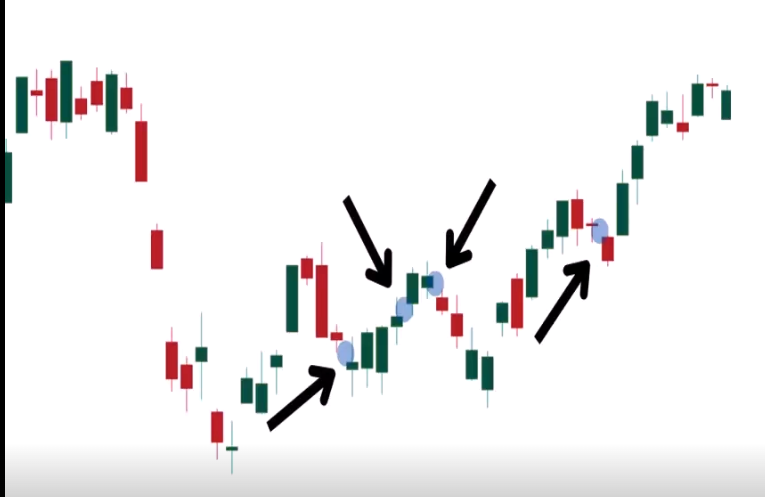
Common Gaps
- Appears in a weak or calm market
- No reason or catalyst for the gap — just minor supply/demand imbalances, market noise, routine technical adjustments
- Often filled quickly — 100% of common gaps get filled
- Low volume — no significant surge in trading activity
- Useful for scalping — if something gaps up for no reason, there's a good chance it fills that day or within a few days. Look for nearby unfilled gaps as profit targets
- Real trade example: Sonic Healthcare gapped up for no reason → educator entered knowing the gap would fill → price came back and filled it same day, also filling a prior gap below. Then the next nearby unfilled gap above became the next target
Breakaway Gaps
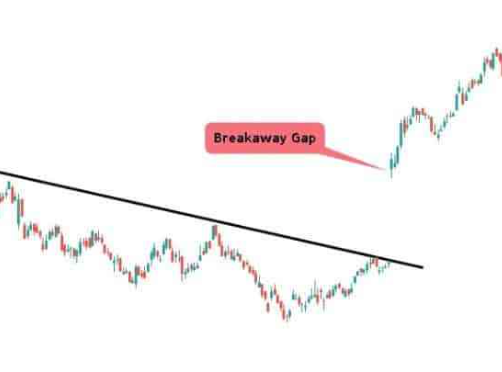
- Price suddenly breaks through a well-defined structure (support or resistance) in the form of a gap
- Usually confirms a breakout — signals the start of a new trend
- Happen at the end of a consolidation pattern or range and usually mark a new trend beginning
- Larger than common gaps — reflects a strong shift in market sentiment
- Usually followed with a significant increase in volume — confirms breakout strength
- Do NOT fill quickly — represents a decisive market move, price generally continues in the gap direction
- Stop loss: Below the gap for upward breaks, above the gap for downward breaks. The gap itself acts as S/R
- Usually caused by:
- Earnings reports (exceed or fail to meet expectations)
- News announcements (mergers, acquisitions, regulatory changes)
- Market sentiment shifts
- Technical breakouts (breaking key S/R where stop losses are clustered)
- A2 Milk example: Had THREE breakaway gaps in succession — each one gapped below a major support level on high volume. Earnings downgrade after earnings downgrade, each time breaking the next support. The high volume on each confirmed institutional money exiting
Runaway Gaps (Continuation / Measuring Gaps)
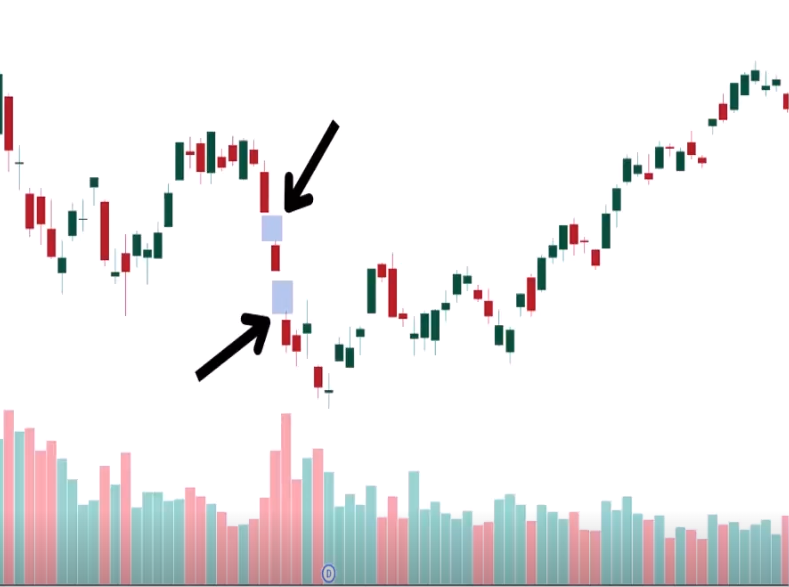
- Appears when the market is gaining or falling quickly — in the middle of an established trend
- Signals dominant buyers or sellers — high probability of continuation
- Usually NOT filled (until the trend eventually ends and the major correction begins)
- Followed with moderate to high volume — confirms trend strength
- Usually in the public participation phase — where the public starts getting involved and everyone piles on
- Measuring tool: The distance from the trend start to the runaway gap can be projected forward to estimate the potential remaining length of the trend (similar to a bull flag measured move)
- If you see a runaway gap, don't take profit at the next resistance — the trend still has momentum and should continue. It's telling you NOT to exit yet
- How to distinguish from exhaustion: Runaway gaps happen in the MIDDLE of the trend. If you're getting gaps at the PEAK after a long overextended run = exhaustion, not runaway
Exhaustion Gaps
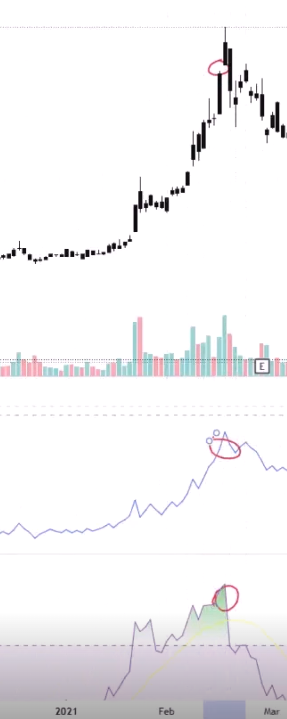
If you gap and then pivot within a few days, it's most likely an exhaustion gap
- Occur near the end of an existing trend, after a prolonged price movement — the trend is reaching its climax
- Usually accompanied by a spike in volume — the final rush of buying/selling (capitulation or complete greed) before the trend reverses. This volume often includes retail traders, indicating the end of institutional interest
- Exhaustion gaps are likely to be filled quickly as the market corrects and reverses
- Signal a high probability of a trend reversal
- Can be used to enter a trade in the opposite direction — exhaustion gap at the bottom might be a good time to enter long
- Everything usually looks very overbought (RSI above 80) or the gap happens into bearish divergence
- How to confirm it's exhaustion:
- RSI very overbought when the gap occurs
- OBV/volume showing institutional money NOT confirming the move (lowering OBV = retailers driving it, not big money)
- Pivot within a few days (doji → bearish engulfing after the gap = classic exhaustion confirmation)
- Already at the excess phase of the trend
- Zip example: Breakaway gap (start) → Runaway gap (middle) → Exhaustion gap (end). RSI very overbought when the exhaustion gap occurred, followed immediately by a doji and bearish engulfing = confirmed exhaustion. Same pattern on NVX and LKE
Professional Gaps (Institutional Gaps)
- Caused by actions of institutions, usually from:
- Earnings reports
- Portfolio rebalancing based on macro trends
- Insider/privileged information or proprietary analysis
- Show sentiment and strategic decisions of institutional players
- Can remain unfilled for a long time if they reflect long-term institutional positioning — especially mining discoveries
- Usually after major announcements — e.g. PointsBet expanding to America, mining companies announcing discoveries
- These signal the very beginning of a new trend — institutional money flowing in
- In Australia, most common with miners making discoveries — institutions unpack the report, like what they see, and start buying. Sometimes takes days as they read more and keep buying
- PDN example: Went from $0.006 to $0.019 in one gap (tripled), then 10x within two days as institutions kept reading the report and buying. Eventually went to $0.30+ — nearly 100x. That gap never filled because it was a genuine major discovery
- 3DP example: Institutional money came in at $0.05, gapped up to $0.08, eventually went to ~$1
Fair Value Gaps (FVGs)
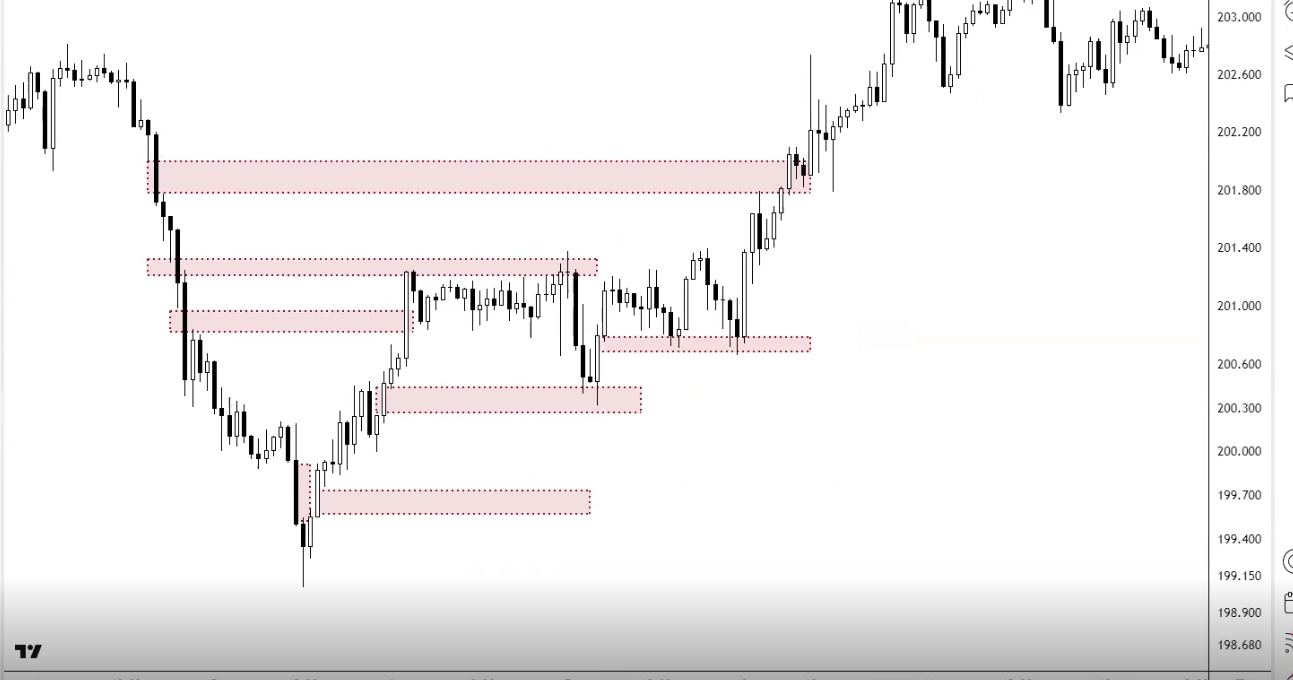
- A place where price has moved too quickly creating a void — most popular in crypto due to 24/7 trading (no normal gaps from market close/open)
- Not an actual gap on the chart — it's the difference between the top of one candle and the bottom of the candle two periods later, with a big candle in between. The "hidden gap" in the body of that middle candle
- Very popular in SMC (Smart Money Concepts) — all about imbalances and liquidity
- Usually filled quickly due to market seeking to correct the imbalance
- Volume: low volume gaps may fill quicker than high volume gaps
- Confluency power: If an FVG aligns with a golden pocket zone (382-618 Fibonacci), that's two independent reasons to expect a retracement to that area. Use FVGs as profit-taking targets when they align with your zag zone
- Crypto & Forex most-filled timeframes:
- 1 hour
- 15 min
- 5 min
- 3 min
Using Gaps for Confluency
Gaps are another tool for your confluency checklist — another river meeting the zone:
- As targets: If there's an unfilled gap that aligns with your Fibonacci zag zone (382-618) and/or a horizontal S/R level = high-probability take-profit zone. "Profit taking is your zag zone. If you can combine that zag zone with an FVG or a gap, it's giving you more confluency to take your profit there"
- As entries: If a gap fill brings price down to a zone where you also have support, Fib level, and bullish divergence = entry confluency
- For trend identification: Breakaway gaps confirm breakouts. Runaway gaps confirm trend strength (don't exit yet). Exhaustion gaps warn of reversal (start looking to exit)
- Scalping with common gaps: If something gaps for no reason, look for nearby unfilled gaps as quick profit targets — they tend to fill within hours or days