
Pattern recognition for confluency
Pattern Recognition for Confluency
Term 2 — combining divergence analysis with chart patterns for high-probability setups. The critical rule: hidden divergence is for continuation patterns, regular divergence is for reversal patterns.
The Core Rule: Match the Right Divergence to the Right Pattern
| Pattern Type | Divergence to Look For | Why |
|---|---|---|
| Continuation (triangles, flags, rectangles) | Hidden divergence | Continuation patterns show trend strength. Hidden divergence = continuation of trend |
| Reversal (H&S, double tops, wedges) | Regular divergence | Reversal patterns show trend weakness. Regular divergence = weakening trend |
You cannot use hidden divergence on reversal patterns — hidden is continuation of the trend, but the trend hasn't flipped yet at the reversal point. Similarly, you wouldn't look for regular divergence to confirm a flag breakout — that's a continuation setup.
Continuation Patterns + Hidden Divergence
Ascending Triangle
Bullish reversal & continuation pattern — higher lows each move into horizontal resistance.
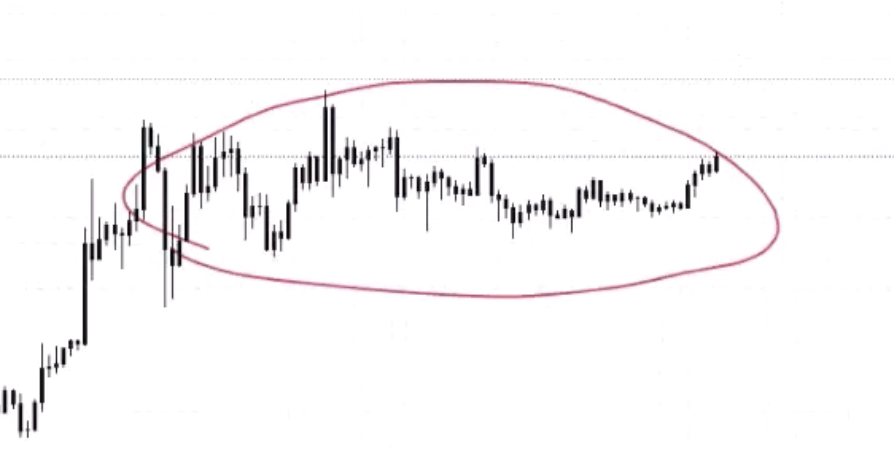
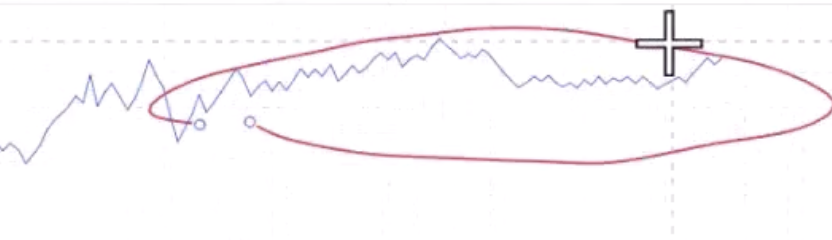
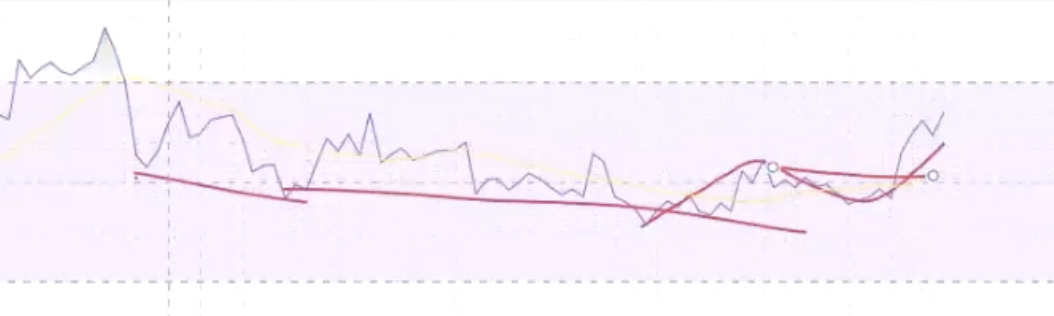
Descending Triangles
Just the opposite — prior downtrend → hitting support → sellers stepping in lower each time.
- Volume confirming the downtrend (lower lows in volume matching lower lows in price)
- Hidden bearish on the rallies within the triangle (lower high on price, higher high on RSI)
- Hidden bearish → convergence on the breakdown
- Change of market structure through support
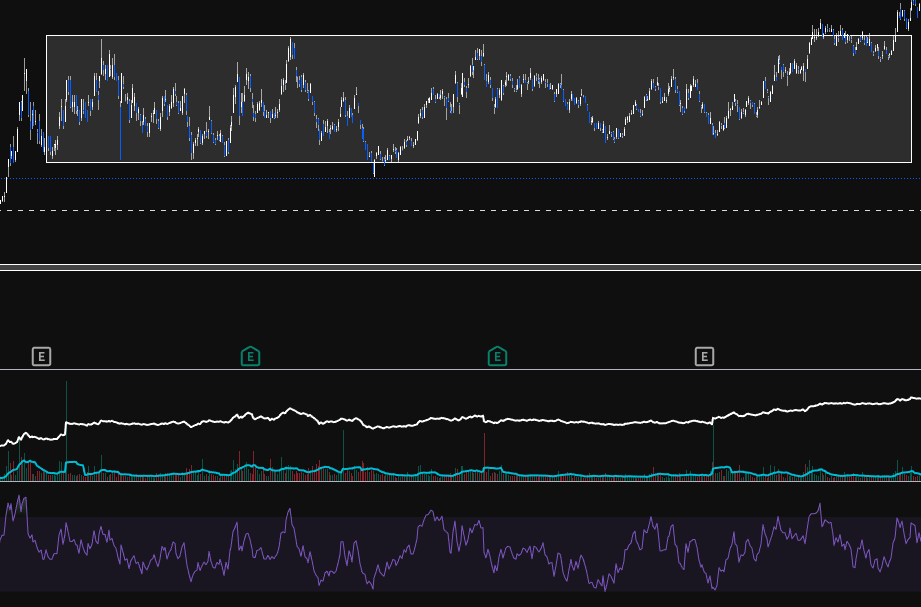
Darvas Box (Rectangle)
A neutral formation that can be bullish or bearish.
- Look for a change of market structure WITHIN the box before the breakout — don't just trade the breakout alone
- RSI can show hidden bullish at the start / pre-box as extra confirmation
- Look for OBV to support the breakout — if OBV breaks out before price, that's a leading indicator
- If it breaks out and comes back in on low volume = liquidity grab, not genuine breakout
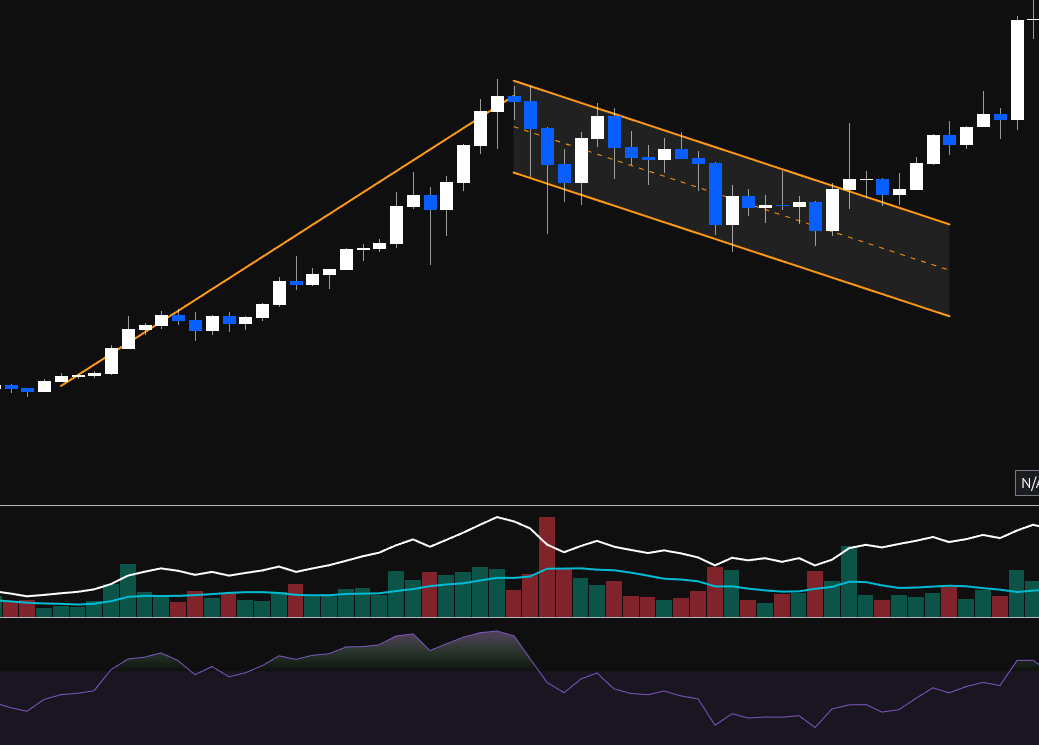
Bull Flag
Strong impulsive move forms the pole, then consolidation usually in the form of a channel.
- Measure Fibs from the first down change of market structure (reversal) to the top change of market structure. An impulse move (zig) is from the end of the last zag to the next zag
- Check if volume did NOT support the move down and DID support the move up
- Compare larger pivot points for hidden bullish divergence
- Flag should NOT retrace past the Fib 382 (maybe 500 max). Definitely not 618 — that's not a flag
- When you find a change of market structure at the end of the bull flag, look for:
- A break through a decline
- Low down volume
- RSI continuation (hidden bullish → convergence)
- Bounce off the 0.382 area
Reversal Patterns + Regular Divergence
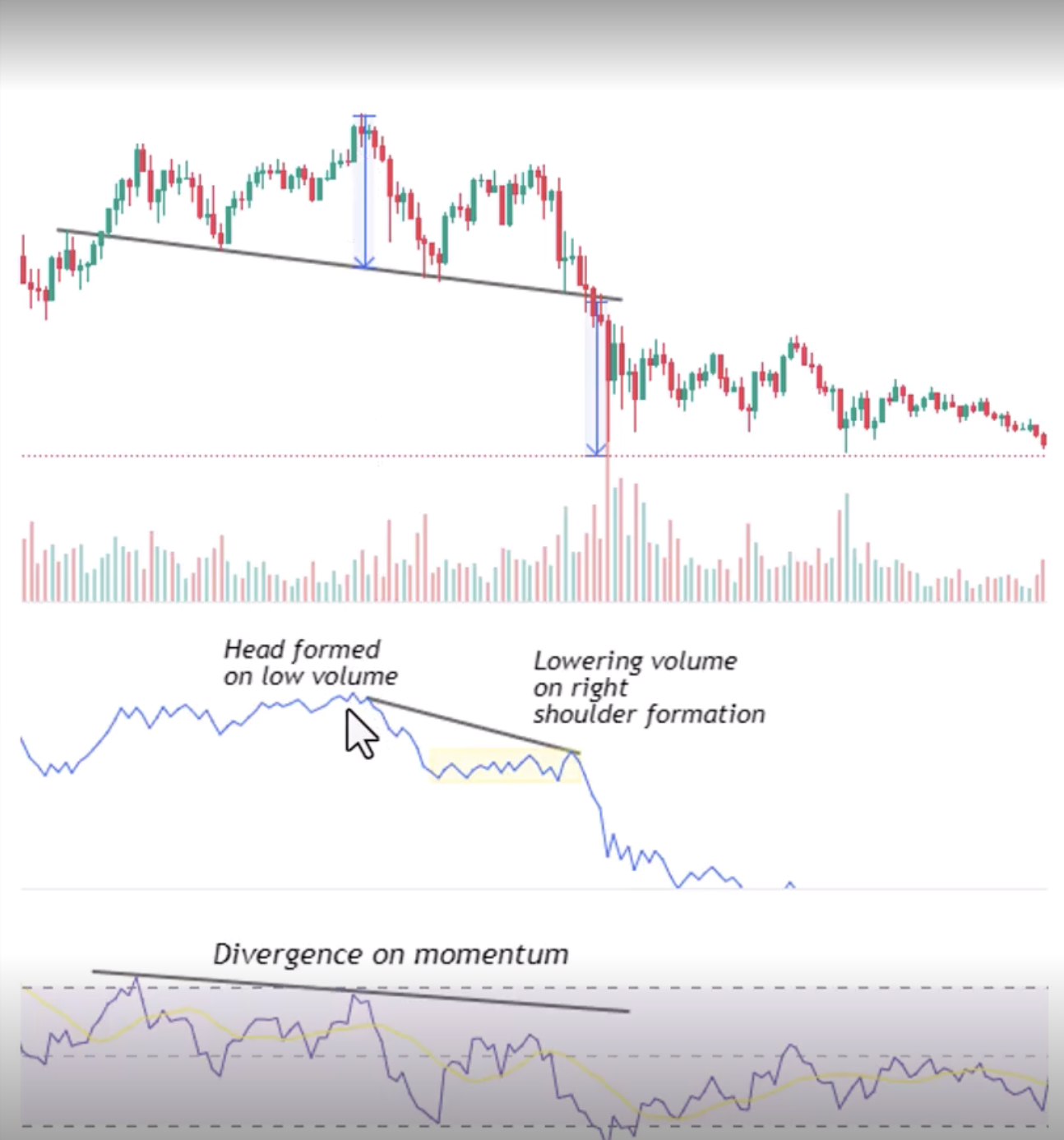
Head & Shoulders
This is a bearish reversal pattern (failure swing).
- The left shoulder is formed on increasing positive volume
- Divergence is found from the top of the left shoulder to the top of the head
- The head will form on lowering / flat OBV, signalling weakness in the trend
- The right shoulder will be formed on even lower OBV, showing weakness in the dip buyers (dumb money buying the dip — thank you very much)
- When the neckline is broken, the pattern is confirmed and there should be increasing down volume on the sell-off (even lower OBV)
- The measured move is from the neckline to the top of the head
Inverse H&S warning: An inverse H&S might just be a zag retracement, not a major bottom. Make sure it breaks through the zag zone. If buyers step in at the 382-618 but don't break through, it could just be a corrective bounce.
Fractals: Each wave can top with a mini H&S. Multiple small H&S combine into one large H&S across the full accumulation → public → excess cycle.
Double Tops / Bottoms
- When price makes an equal high (double top), RSI should be LOWER = bearish divergence (weakening trend)
- Volume: lowering volume on the second top. Volume confirms the zigs down but NOT the rallies back up (opposite of continuation)
- Divergence → convergence as it breaks the neckline
- No hidden divergence — this is a reversal pattern, only regular divergence applies
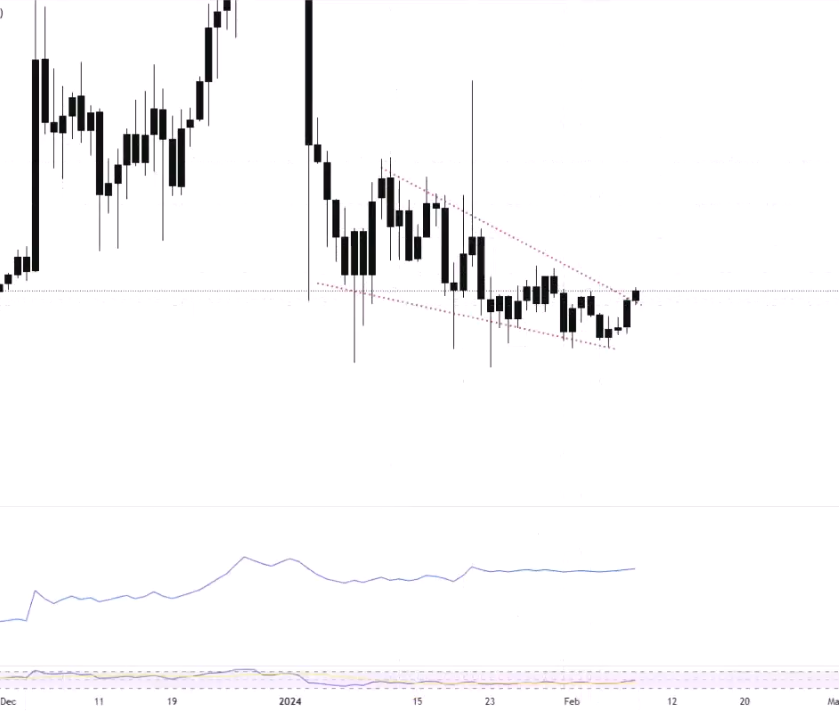
Falling Wedge (ASX Trader's Favourite)
- If a wedge starts forming into a zag zone, that should be the end of the ABC
- OBV should NOT support the move down and SHOULD support the move up
- Bullish divergence off the bottom of the wedge adds a point of confluency
- Hidden bullish divergence off the low if running into a zag zone (showing the larger uptrend will continue)
- Hidden bearish could be found at the top of the wedge if not at a bottom (within the wedge, showing the downtrend within the wedge is continuing — but this transitions into bullish divergence as the wedge exhausts)
- Two types: retracement wedge (had an uptrend, corrected down into zag zone) and bottom wedge (at the very bottom of a long downtrend, the final move / ending diagonal)
Summary: The Complete Pattern Fusion Framework
For Any Continuation Pattern
- Volume: Confirm the trend direction, don't confirm the corrections
- Hidden divergence: From the pullback pivots showing continuation
- Divergence → convergence on the breakout
- Change of market structure through the pattern boundary
For Any Reversal Pattern
- Volume: Don't confirm the trend direction (weakening), DO confirm the reversal direction
- Regular divergence: Showing the trend is weakening
- Divergence → convergence on the change of market structure
- No hidden divergence — the trend hasn't flipped yet at the pattern formation point
The Practical Takeaway
You're not trading because you see a pattern. You're trading because:
- Market structure confirms it ✓
- Volume profile supports it ✓
- The right type of divergence backs it up ✓
- Divergence has moved into convergence ✓
- You have confluency from multiple independent methods ✓
This is pattern fusion — combining the visual pattern with the underlying data (volume + divergence) to separate the genuine breakouts from the fake ones.